

Table of Contents
- Why Job Site Ladder Safety Matters for Construction Teams
- Pre-Use Ladder Inspection and Structural Integrity Checks
- Proper Ladder Setup and Stabilization Techniques on Varied Terrain
- Three Points of Contact and Safe Climbing Techniques
- Industrial Ladder Training Programs for Construction Crews
- Ladder Safety Toolbox Talk Topics for Your Team
- Maintenance and Storage for Long-Term Ladder Reliability
- Selecting the Right Ladder for Your Job Site Conditions
- Frequently Asked Questions
Last Updated: October 4, 2026
Why Job Site Ladder Safety Matters for Construction Teams
Ladder accidents are a leading cause of workplace injuries in construction (the CDC). Falls cause project delays, insurance claims, regulatory investigations, and damage to team morale. Improving job site ladder safety is foundational to professional operations.
Safe work at height requires systematic preparation, proper equipment selection, and consistent training.
This guide covers inspections that catch problems before injuries, setup techniques for uneven ground, climbing fundamentals, and maintenance routines. The goal is to give your team the knowledge and tools to work at height safely.
Pre-Use Ladder Inspection and Structural Integrity Checks
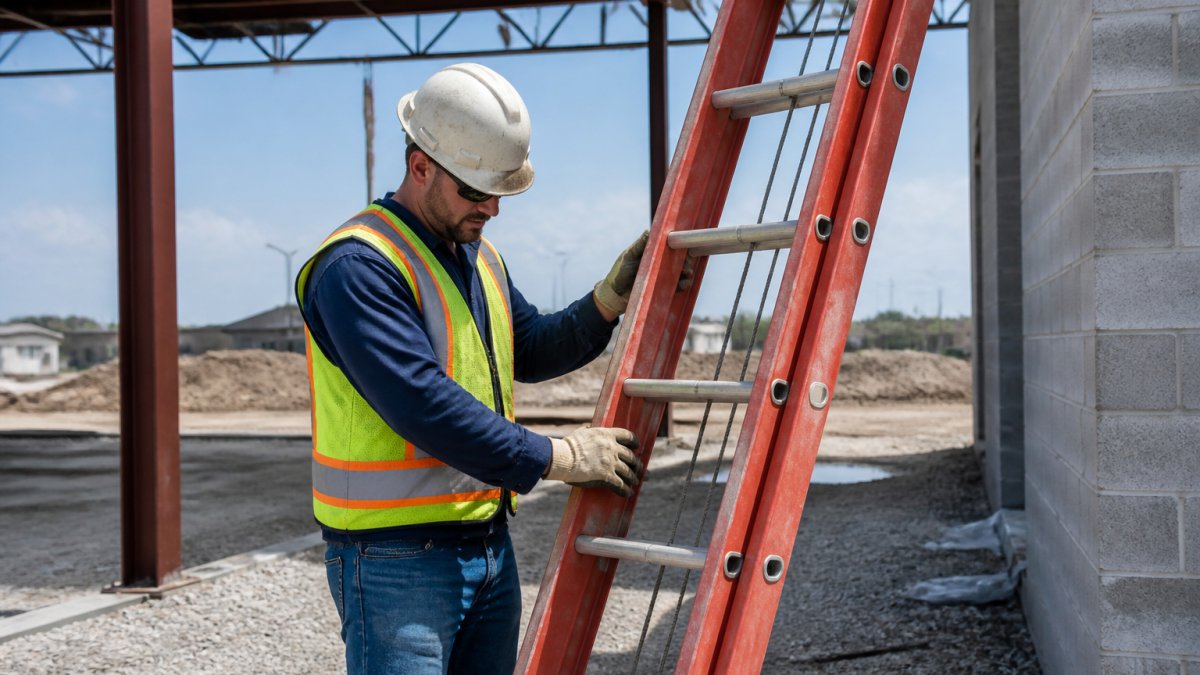
Every shift should start with a thorough ladder inspection. This catches cracks in side rails, bent rungs, or loose hardware before they fail under load.
What to Inspect Before Every Shift
Check side rails for cracks, splits, dents, or corrosion by running your hand along the full length. Grip each rung and try to move it side to side, rungs should be solid with no flex at connection points.
Check feet for intact, non-worn pads. For extension ladders, verify overlap of at least 3 rungs (up to 32 feet) or 4 rungs (longer ladders). Inspect locking mechanisms to ensure they engage smoothly and hold firmly.
For fiberglass ladders, check for splintering, cracks, or UV damage. Inspect all hardware, bolts, rivets, welds, for rust, corrosion, or looseness, as a single loose bolt can compromise the structure.
Using an OSHA Ladder Inspection Checklist
A formal inspection checklist transforms a casual glance into a systematic process. According to OSHA's ladder safety standards, employers are responsible for ensuring ladders are inspected regularly and maintained in safe condition. Create a checklist specific to your operation that includes these elements:
- Side rails: intact, no cracks or bends
- Rungs and steps: secure, no damage, proper spacing
- Feet and base: non-slip pads intact, no wear
- Hardware: bolts, rivets, welds secure and rust-free
- Extension locks: engage smoothly, hold firmly
- Angle and setup: positioned at correct climbing angle before use
- Weight capacity: load (worker + tools) does not exceed rating
- Environmental hazards: no overhead power lines, traffic, or unstable ground
Document each inspection with date, inspector name, ladder ID, and issues found. Digital checklists on mobile devices timestamp automatically and flag equipment needing maintenance.
Proper Ladder Setup and Stabilization Techniques on Varied Terrain
The angle at which you position your ladder determines stability and body strain. Correct positioning makes the ladder a platform you can trust.
Calculating the 4:1 Climbing Angle Rule
The 4:1 rule is standard: for every 4 feet of vertical height, place the base 1 foot away from the wall. This creates a 75-degree climbing angle that prevents tipping and base sliding.
Measure the height where your ladder will rest, divide by 4, and place the base that distance from the wall. For 12 feet height, base is 3 feet away; for 20 feet, base is 5 feet away.
The 4:1 angle balances slip risk at the base with tipping risk at the top, minimizing both hazards.
Stabilizers and Ground Cue Systems for Uneven Surfaces
Most job sites have uneven ground. Stabilizers and ground cue systems are essential safety equipment, not optional add-ons.
Stabilizers are adjustable arms extending from side rails, creating a wider base to prevent side-to-side tipping.
A ground cue system marks the proper distance from the wall, eliminating guesswork. The Safety Cage® 2.0 includes this feature, ensuring consistent setup and building muscle memory.

For truly uneven terrain, consider using leveling plates or shims under the feet. These small adjustable platforms can compensate for slopes up to about 10 degrees.
Three Points of Contact and Safe Climbing Techniques
Three points of contact is the fundamental rule: always maintain either two hands and one foot, or two feet and one hand on the ladder to prevent falls from lost balance or slipping.
Move one limb at a time: secure both hands before moving a foot, then move one hand while both feet are planted. This alternating pattern maintains three points of contact throughout the climb.
Avoid carrying tools in both hands, use a tool belt, rope bucket, or hoist instead. Rushing causes workers to skip rungs or move multiple limbs at once, breaking the three-point rule. Slow, deliberate movements are faster overall.
Stay centered on the ladder. Leaning too far to one side puts uneven weight on the rails and increases tip risk.
Industrial Ladder Training Programs for Construction Crews
Structured training programs ensure consistency across teams better than single toolbox talks. Combine classroom instruction, hands-on practice, and regular refreshers.
Effective training covers inspection, setup, climbing, and hazard recognition on actual job site conditions, slopes, obstacles, and varied surfaces. Practice with tools, fatigue, and time pressure, when mistakes happen.
According to OSHA's training requirements for fall protection, workers exposed to fall hazards must receive training on the hazards they will face and the procedures to protect them. This training must be provided before the worker is allowed to work at heights, and refresher training must occur when changes in the workplace render previous training obsolete.
Bring in a professional trainer annually for current regulatory knowledge, accident case studies, and credibility that identifies normalized unsafe practices.
Ladder Safety Toolbox Talk Topics for Your Team
Toolbox talks are 5-to-10-minute safety conversations at shift start. Effective talks focus on one topic, include a real example or near-miss, and end with a specific action the team will take.
Common Hazards to Address
Address hazards your team actually faces: power lines, sloped ground, weather. Specific talks about "why we position stabilizers before climbing today" stick better than generic "ladder safety" talks.
Use near-miss incidents as toolbox talks. "Yesterday, a ladder slid because the feet were dirty. Today, we're checking and cleaning feet before every setup." This connects rules to real events.
Environmental hazards deserve attention: overhead power lines, traffic areas, wind exposure, wet surfaces, and uneven ground all change how you approach ladder work. A talk about power line clearance might save someone's life. A talk about wet surfaces might prevent a slip that seems minor but has serious consequences.
Load Capacity and Weight Distribution
Every ladder has a rated safe working load. This includes the worker's body weight plus tools, materials, and equipment. Exceeding the rating is a common mistake, especially when workers carry more than they should because they want to make fewer trips.
A typical construction ladder might have a capacity of 250-300 pounds. The Little Giant® Work Platform PRO, for example, is rated for 150 kilograms and serves as both a step and a tool platform, reducing the need to carry items while climbing.

Weight distribution matters too. Tools should be distributed evenly, not all on one side. A heavy tool bag on one shoulder shifts your center of gravity and makes the ladder more likely to tip. A tool belt distributes weight evenly around your waist.
Maintenance and Storage for Long-Term Ladder Reliability
A ladder that's been neglected for five years won't perform the way it did when new.
After each use, wipe down the ladder to remove dirt, mud, or salt spray. These substances accelerate corrosion and can make surfaces slippery. Check the feet and rails for any damage that happened during the day.
Monthly, do a more thorough inspection. Clean the rungs with a brush to remove any buildup. Check all bolts and hardware for tightness.
Store ladders in a dry location. Moisture causes rust and weakens wood or composite materials. Avoid storing ladders in direct sunlight for extended periods, which can degrade certain materials.
For fiberglass ladders, UV exposure can cause brittleness over time. While fiberglass is more resistant than wood, extended outdoor storage still degrades it.
Selecting the Right Ladder for Your Job Site Conditions
The ladder you choose determines much of your safety margin. A ladder that's too short forces you to overreach. A ladder that's too narrow makes it harder to maintain balance.
Start with the height you need to reach. Measure the vertical distance from the ground to your highest working point.
Consider the terrain where you'll be working. If you're on slopes, uneven surfaces, or varied terrain, a ladder with adjustable stabilizers or a multi-position design becomes essential.

Material matters for the environment. Aluminum ladders are lightweight and durable but conduct electricity. If you're working near power lines or in electrical environments, fiberglass is the right choice.
Weight capacity should exceed your total load by a significant margin.
At Distributor of Little Giant LTD, we've built our products around the reality of job sites. Our multi-functional ladders like the Safety Cage® 2.0 and Adjustable Safety Cage™ include the stabilization systems and platform designs that make safe setup automatic, even on challenging terrain. Combined with accessories like the Little Giant® Work Platform PRO and Little Giant® AirDeck®, you have a complete system that removes excuses and makes safety the path of least resistance.
Frequently Asked Questions
What is the 4:1 rule for ladder safety?
The 4:1 rule means for every 4 units of height you climb, the base of the ladder should be 1 unit away from the wall or surface. For example, if you're reaching 12 meters high, position the ladder base 3 meters from the wall. This angle, approximately 75 degrees, keeps the ladder stable and prevents tipping. Contractors who follow this rule reduce slip and fall incidents significantly on job sites.
How often should ladder inspections be conducted on industrial sites?
Conduct a visual inspection before every use and a detailed structural check at least monthly on active job sites. After any fall, impact, or suspected damage, inspect immediately. Industrial ladder training programs for construction crews emphasize daily pre-shift checks as standard practice. Document all inspections to track wear patterns and plan replacement schedules, especially for ladders used daily in harsh conditions.
What are the most common job site ladder safety violations?
The most common violations include failing to maintain three points of contact while climbing, overreaching beyond the ladder's side rails, positioning the ladder on unstable or uneven ground without stabilizers, and skipping pre-use inspections. Ladder safety toolbox talk topics should regularly address these mistakes. Workers also frequently ignore load capacity limits and attempt to work on damaged rungs or side rails, creating serious fall risks on job sites.
What equipment helps stabilize ladders on uneven terrain?
Adjustable stabilizers, outriggers, and ground cue systems are essential for uneven surfaces common on construction sites. Products like the Safety Cage® 2.0 feature independent adjustable outriggers that level the ladder on sloped or rocky ground. Leveling feet with rubber bases improve grip on hard surfaces. Proper ladder setup and stabilization techniques require matching the stabilizer type to your specific job site terrain, concrete, gravel, mud, or sloped areas each demand different approaches.
Why is fiberglass better than aluminum for electrical work?
Fiberglass is non-conductive, making it safe for electrical maintenance where contact with live wires poses electrocution risk. Aluminum conducts electricity and is hazardous around power lines or electrical equipment. Electricians and maintenance professionals requiring non-conductive fiberglass ladders benefit from this safety advantage, especially in industrial settings. Fiberglass also resists corrosion in wet environments and maintains structural integrity longer than aluminum in harsh job site conditions.
How do I train my construction crew on ladder safety?
Industrial ladder training programs for construction crews should cover pre-use inspection, proper climbing techniques, three-point contact, load capacity limits, and hazard recognition. Conduct monthly toolbox talks on specific topics like working near power lines or on slopes. Use real examples from your job sites. Hands-on practice with proper setup and stabilization techniques is more effective than classroom instruction alone. Document training attendance and reinforce learning through regular safety reminders and incident reviews.
What should I include in a ladder safety toolbox talk?
Ladder safety toolbox talk topics should rotate through: proper climbing angle and base positioning, three-point contact requirements, load capacity and weight distribution, common hazards specific to your current job site, equipment inspection procedures, and emergency protocols. Keep talks brief (5-10 minutes) and relevant to that day's work. Include near-miss incidents from your site or industry. Ask workers to share their own safety concerns. Effective talks prevent complacency and keep safety top-of-mind for your team.