

Table of Contents
- Quick Comparison: Top Rated Ladders for Contractors
- 1. Little Giant A-Force300XP: Best Step Ladder for Electrical Work
- 2. King Kombo Industrial: The 3-in-1 Ladder for Tight Spaces
- 3. HyperLite with Sumostance: Best Extension Ladder for Uneven Terrain
- 4. Conquest 2.0 PRO: Best Multi-Position Ladder for Roofing
- 5. Revolution 2.0: The Most Versatile Ladder for General Contractors
- 6. Safety Cage 2.0: Best Platform Ladder for Industrial Maintenance
- How to Choose the Right Ladder for Your Job Site
- Frequently Asked Questions
Last Updated: September 30, 2026
Quick Comparison: Top Rated Ladders for Contractors
Choosing top rated ladders for professional contractors comes down to matching three things: duty rating, material, and reach. Get those wrong and you either overspend or under-protect your crew. This guide from Distributor of Little Giant LTD breaks down six professional-grade options.
The ladders below range from a fiberglass step ladder built for electrical work to a platform ladder with a full safety cage. Every one carries a minimum 136 kg load rating.
| Model | Best For | Material | Load Rating | Price |
|---|---|---|---|---|
| A-Force300XP | Electrical work | Fiberglass | 136 kg | 345.00 |
| King Kombo Industrial | Tight spaces | Fiberglass | 150 kg | 305.00 |
| HyperLite with Sumostance | Uneven terrain | Fiberglass | 150 kg | 1,175.00 |
| Conquest 2.0 PRO | Roofing | Aluminum | 150 kg | 670.00 |
| Revolution 2.0 | General contracting | Aluminum | 136 kg | 567.60 |
| Safety Cage 2.0 | Industrial maintenance | Fiberglass | 150 kg | 1,442.00 |
Below, we cover what each ladder does well and which job sites it suits.

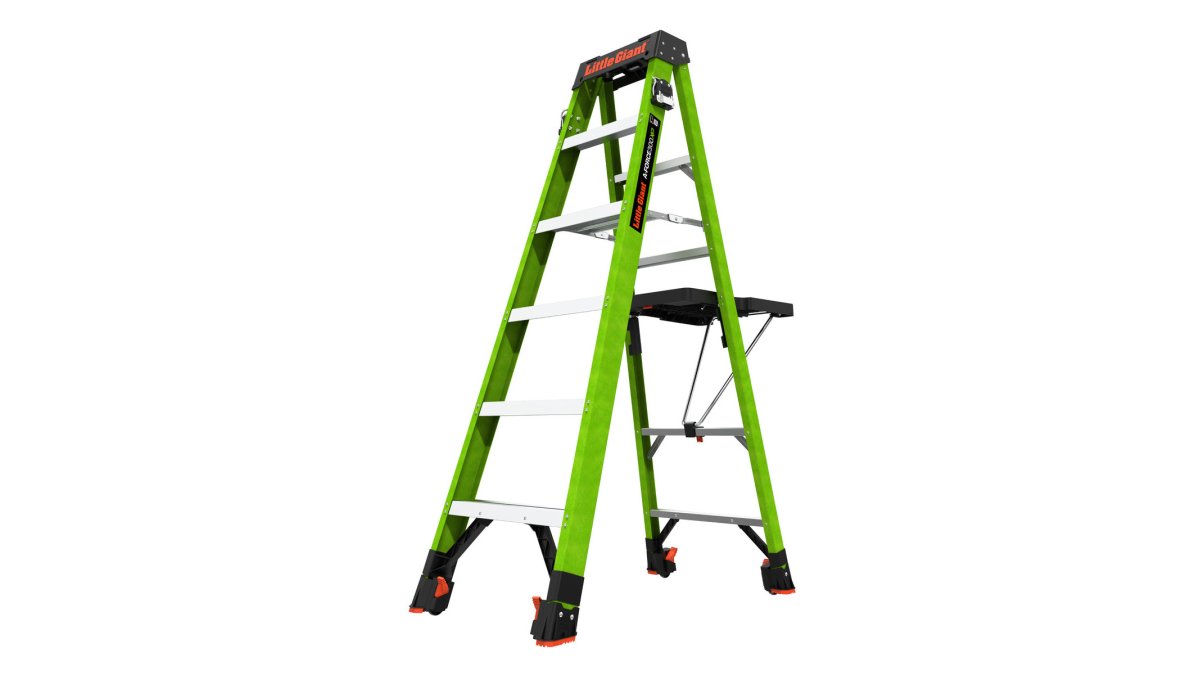
1. Little Giant A-Force300XP: Best Step Ladder for Electrical Work
The A-Force300XP is rated Type IA with a 136 kg capacity.
Its fiberglass rails make it non-conductive, and fiberglass resists corrosion around chemicals and moisture.
The patented Comfort Step adds five extra inches of standing room, cutting foot fatigue on long jobs. The top cap has four accessory ports, plus a magnetic tool tray and holster-style holders.
HoverGlide feet engage when you tilt the ladder to move it and lock when you step on, so you reposition without climbing down.
The A-Force300XP has a one-year warranty. For daily electrical work, the non-conductive build justifies the 345.00 price.
2. King Kombo Industrial: The 3-in-1 Ladder for Tight Spaces
King Kombo Industrial converts between a leaning ladder and an A-frame, so one tool covers two jobs.

The V-bar rests against corners, poles, and columns in the extended position. In the leaning position, a rotating wall pad grips inside and outside corners while protecting paint, drywall, and render from scuffing.
Ground Cue is the standout safety feature: a sensor in the bottom rung clicks when you step on it, so you know you have reached the ground without looking down.
At 305.00 with a 150 kg rating, this is an affordable ladder option. Fiberglass construction keeps it non-conductive.
3. HyperLite with Sumostance: Best Extension Ladder for Uneven Terrain
HyperLite with Sumostance is an extension ladder with a leveling system built for uneven ground. The SumoStance outriggers more than double the base width, reducing the risk of sideways tipping.

That matters on sloped driveways, gravel, soft soil, and graded sites. Standard extension ladders sit level or not at all; this one adjusts to nearly any surface.
Sure-Set feet handle different ground types, side-mounted bubble levels let you check plumb before you climb, and the rope and pulley system makes extending a one-person job.
At 1,175.00 it is a higher-priced ladder option, and the 150 kg rating matches other models. You are paying for the leveling system and fiberglass build.
4. Conquest 2.0 PRO: Best Multi-Position Ladder for Roofing
Conquest 2.0 PRO All-Terrain is built around roof access: telescoping leveling legs adapt to uneven ground, and two multifunctional safety rails double as handholds and standoffs.
Those rails let you lean the ladder against both sides of a window and stabilize it around gutters, keeping it off the work surface and giving you something to grip on the way down.
Rapid Locks regulators change the configuration quickly, and it converts into a scaffold for larger jobs. Tip & Glide wheels ease transport, and the 127 cm length and 150 kg capacity suit most residential and light commercial work.
At 670.00, it sits in the middle of this lineup. The limitation is that it is aluminum, so it is not the right pick for live electrical work. For roofing and general access, the safety rails are the reason to choose it.
5. Revolution 2.0: The Most Versatile Ladder for General Contractors
Revolution 2.0 works as an A-frame, extension ladder, 90-degree ladder, stairwell ladder, and scaffold base.
The aviation-grade aluminum build is light enough to carry and strong enough for daily site use, meeting or exceeding OSHA and ANSI standards with a Type IA rating for loads up to 136 kg.
Rock Lock regulators and palm buttons change size and configuration one-handed, wider outer rungs reduce foot fatigue, and built-in Ratchet leveling legs handle uneven surfaces.
At 567.60, it is a competitively priced option. The catch: aluminum is conductive, so it is not for electrical work, and the ratchet leveling is available on selected models only.
6. Safety Cage 2.0: Best Platform Ladder for Industrial Maintenance
Safety Cage 2.0 can be used for many maintenance jobs. The enclosed cage gives 360-degree access and lets you work with both hands free.
The wide platform has raised edges to show where to stand, and Adjustable Outriggers provide side stability with two independent regulators, which matters on uneven plant floors where one side always sits lower.
Four industrial locking wheels let you move the unit without folding it. Fiberglass keeps it non-conductive, and Ground Cue confirms the bottom rung by feel.
At 1,442.00, it is a higher investment option. For plants that regularly rent lifts or build temporary scaffolding, it can offer efficiency benefits.
How to Choose the Right Ladder for Your Job Site
Start with the duty rating, then work backward to material, reach, and configuration. Duty rating is the total weight the ladder supports, worker, tools, and materials, and most professional work needs Type I or higher.
| Duty Rating | Load Capacity | Typical Use |
|---|---|---|
| Type III | 90 kg | Light household |
| Type II | 102 kg | Medium household |
| Type I | 113 kg | Heavy duty, light trade |
| Type IA | 136 kg | Extra heavy duty, professional |
| Type IAA | 170 kg | Special duty, industrial |
Reach height is not the same as ladder length. Check the manufacturer's maximum reach figure before you buy.
Material comes down to one question: are you working near live circuits? If yes, fiberglass, its non-conductive rails and corrosion resistance also suit chemical plants and outdoor sites. Aluminum is lighter and cheaper but conducts electricity. For crews doing both electrical and general work, a common approach is to use one fiberglass step ladder for panel and trim work plus one aluminum multi-position ladder for other tasks.
Configuration matters more than most buyers expect. Match the ladder to the task, not the other way around:
- Step ladder (A-frame): interior trim, panel work, short-duration tasks on flat ground. Self-supporting, no leaning surface required.
- Extension ladder: roof access, exterior work, wall and gutter reach. Requires a stable leaning surface and level footing.
- Multi-position ladder: mixed-task days where you cannot predict the next configuration. Replaces two or three single-purpose ladders in a van.
- Platform or caged ladder: maintenance work that needs both hands free for extended periods, or where scaffolding setup time is not justified.
Before every use, run a OSHA ladder safety requirements for contractors check: inspect rails for cracks, confirm the feet are intact, and verify the locking hinges engage. Contractors working at height should also review NIOSH fall prevention guidance for the broader site controls that apply above ladder work.
Frequently Asked Questions
What duty rating should a professional contractor ladder have?
For professional use, look for a Type IA ladder with a 300 lb (136 kg) duty rating. Always check the load rating before buying.
Are multi-position ladders better than traditional extension ladders for pros?
Multi-position ladders offer more flexibility for contractors who need one tool for multiple tasks. They can convert between A-frame, extension, and scaffold modes. For roof access, a multi-position ladder with stabilizer bars can be a good choice.
What are the OSHA ladder safety requirements for contractors?
OSHA requires ladders to be inspected before each use, free of defects, and used on stable surfaces. For extension ladders, the top must extend 3 feet above the landing. Contractors must maintain three points of contact and never exceed the load rating. Non-conductive fiberglass ladders are required near live electrical sources.
How do I choose the right ladder height for professional work?
Measure the working height you need, then use the maximum reach height for step ladders or add 4 feet for extension ladders. Always check the ladder's maximum reach height before buying.
What maintenance tasks should be on a ladder checklist for contractors?
Inspect rails for cracks, check locking hinges for smooth operation, and verify slip-resistant feet are intact. Replace any damaged parts immediately.