

Table of Contents
- Fiberglass vs Aluminum Ladders: The Safety Difference That Decides Everything
- Side-by-Side Comparison: Fiberglass and Aluminum at a Glance
- Non-Conductive Ladder Requirements Every Electrician Should Know
- Ladder Weight Capacity Ratings and What They Mean on Site
- OSHA Ladder Safety Standards for Electricians
- Weight, Portability and Stability: Where Aluminum Wins and Loses
- Fiberglass Ladders Built for Electrical Work
- Frequently Asked Questions
Last Updated: October 2, 2026
Fiberglass vs Aluminum Ladders: The Safety Difference That Decides Everything
The choice between fiberglass vs aluminum ladders for electricians comes down to one non-negotiable fact: aluminum conducts electricity, and fiberglass does not. That single difference decides which ladder belongs on a live-wire job. Everything else, weight, cost, and lifespan, is a trade-off you manage around it.
At Distributor of Little Giant LTD, we've spent over 50 years innovating ladder solutions for craftsmen, construction companies, and industrial sites, and the question we hear most from electrical crews is simple: is aluminum ever acceptable? The short answer is yes, but only when the power is confirmed dead. Below, we break down dielectric ratings, load capacities, and the inspection habits that keep you compliant.

Side-by-Side Comparison: Fiberglass and Aluminum at a Glance
Here is how the two materials stack up on the criteria that matter on site.
| Factor | Fiberglass | Aluminum |
|---|---|---|
| Electrical conductivity | Non-conductive | Conductive |
| Weight | Heavier | Lighter |
| Cost | Higher | Lower |
| Corrosion resistance | Resists rust | Can oxidize |
| Best for | Live electrical work | Dead circuits, general tasks |
| UV sensitivity | Degrades over time | Minimal effect |
Neither material wins across the board. Fiberglass takes the safety category outright. Aluminum takes portability and price. The right pick depends entirely on what you're standing in front of.
Non-Conductive Ladder Requirements Every Electrician Should Know
A non-conductive ladder is one built from a material that does not carry electrical current, and fiberglass is the standard for this role. The term you'll see on spec sheets is dielectric strength, which describes how well the material resists current flow. But here's what most guides skip: dielectric performance is not a single number. It's tied to the ladder's ANSI duty rating, and those ratings tell you exactly how much electrical insulation you're actually getting.
The ANSI ladder standards overview defines four duty ratings, and for electricians, the difference between them is not just load capacity, it's safety margin:
- Type III: 200 lbs, light duty. Not suitable for professional electrical work.
- Type II: 225 lbs, medium duty. Acceptable for light tasks, but rarely specified for live-wire jobs.
- Type IA: 300 lbs, extra heavy duty. The minimum most electrical crews should consider.
- Type IAA: 375 lbs, special duty. The highest rating, offering the greatest structural and dielectric margin.
Why does this matter for non-conductive performance? A higher duty rating means thicker rails, more robust construction, and a larger volume of insulating fiberglass. That extra material doesn't just carry more weight, it also provides more dielectric barrier between you and the current. A Type IAA fiberglass ladder is not just stronger; it's a better insulator than a Type II ladder of the same height.
What most guides miss is that "non-conductive" is not a permanent property. Fiberglass ladders lose dielectric integrity when the surface is wet, dirty, or contaminated with grease. A clean, dry fiberglass ladder behaves very differently from a grimy one. That's why the OSHA guidance on ladder safety treats inspection as part of the requirement, not an optional step.
For electricians, the practical rules are:
- Use fiberglass for any work near energized equipment
- Never assume a ladder is non-conductive because it looks clean
- Wipe down rails before working near live wires
- Check for cracks, chips, and exposed fibers before every shift
- Confirm the ladder's ANSI duty rating meets or exceeds the task's load and safety requirements
Ladder Weight Capacity Ratings and What They Mean on Site
Ladder duty ratings tell you the maximum total load a ladder is built to support, including you, your tools, and your materials. The ANSI ladder standards overview defines the tiers, and they are not interchangeable.
- Type III: 200 lbs, light duty
- Type II: 225 lbs, medium duty
- Type IA: 300 lbs, extra heavy duty
- Type IAA: 375 lbs, special duty
Here is where weight-to-stability ratio matters, and it's an angle most competitors skip. A heavier ladder is often a more stable ladder, because the extra mass sits low and resists side-to-side sway. Fiberglass runs heavier than aluminum at the same duty rating, which is a real advantage when you're reaching overhead on a concrete floor.
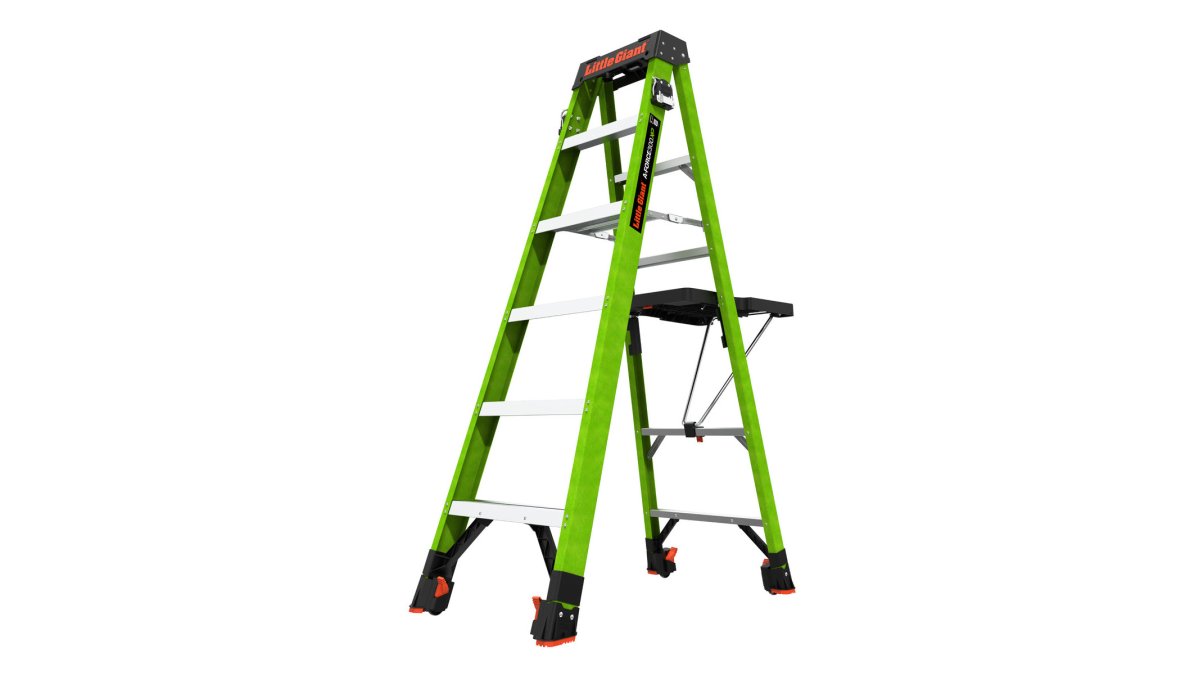
The Little Giant A-Force300XP, for example, carries a Type IA rating at 300 lbs (~136 kg) and weighs 23 lbs (~10,4 kg). That combination of high capacity and manageable weight is the balance point to look for. You can see the full specification on the Little Giant A-Force300XP product page.
OSHA Ladder Safety Standards for Electricians
OSHA ladder safety standards for electricians center on three duties: inspect before use, maintain three points of contact, and use the right ladder for the task. The OSHA ladder regulations for construction require that ladders be inspected for visible defects before each use and removed from service if damaged.
In practice, that means a documented inspection routine. A common mistake is treating inspection as a once-a-month formality. On active job sites, damage happens fast, and a cracked fiberglass rail can fail without warning.
Weight, Portability and Stability: Where Aluminum Wins and Loses
Aluminum wins on portability, full stop. It is lighter, easier to carry one-handed, and cheaper to replace. For general construction, painting, and any task where the power is locked out, aluminum is the sensible pick.
Where it loses is on electrical work and on corrosion. Aluminum can oxidize over time, and it conducts. That makes it unsuitable for live-wire tasks, no exceptions.
The Xtra-Lite Plus 2.0 shows what aluminum does well: a lightweight build with a 150 kg capacity, a rotating handle, and a wide platform. It's a general-purpose tool, not an electrical one. See the Xtra-Lite Plus 2.0 details if portability is your priority.

Fiberglass Ladders Built for Electrical Work
Fiberglass is the material electricians should default to, and the design details matter as much as the material.
For live-wire work, the design details that matter most are the ones that keep you stable and insulated. The Conquest 2.0 Fiberglass is built for the job, with a 150 kg capacity, a non-conductive Hi-Viz green frame, and industrial feet for uneven terrain. The HyperLite with Sumostance adds a leveling system that more than doubles the base width, which cuts the risk of sideways tipping on sloped ground. Both are worth reviewing on the Conquest 2.0 Fiberglass page and the HyperLite with Sumostance page.

Frequently Asked Questions
Why don't electricians use aluminum ladders?
Aluminum conducts electricity, so any contact with a live wire or energized panel can pass current straight through the ladder and into the person standing on it. Fiberglass ladders are non-conductive, which is why they are the standard choice for electrical work. Even then, fiberglass only protects you when it is clean and dry, since moisture and dirt on the rails can create a path for current.
Are fiberglass ladders conductive?
A clean, dry fiberglass ladder is non-conductive, which is why it meets non-conductive ladder requirements for electrical work. The catch is condition: water, oil, dust or damage on the rails can reduce that insulation. Inspect the ladder before every use, keep it dry, and replace it if you see cracks, chips or exposed fibers on the rails.
What are the downsides of fiberglass ladders?
Fiberglass ladders weigh more than aluminum equivalents, so carrying them across a site or up stairs takes more effort. They also cost more. That is why fiberglass needs regular inspection and, eventually, replacement even if it has never been dropped.
What ladder weight capacity rating do electricians need?
For professional electrical work, look for a Type IA ladder rated to 300 lbs (about 136 kg). This covers a person plus tools, cable reels and test equipment, and it gives a safety margin that lighter Type II or Type III ladders do not. Ladder weight capacity ratings include the user, clothing and everything carried up, so add up the real load before choosing.
Is an aluminum ladder better than a fiberglass ladder?
Aluminum wins on weight and price, which makes it a good fit for general construction and tasks with no electrical exposure. For electricians working near live wires, fiberglass is the safer option because it does not conduct current. If your team does both types of work, keep a fiberglass ladder for electrical jobs and use aluminum only where no energized equipment is present.