

Table of Contents
- Why Space-Saving Ladders Matter on Construction Trucks
- How to Measure Your Truck Bed for the Right Fit
- Compact Truck Ladders: Folding vs. Telescoping vs. Retractable
- Pull-Out Trailer Step Ladder Installation and Use
- Truck Ladder Rack Solutions for Safe Storage
- Understanding Ladder Load Capacity for Job-Site Demands
- Installation, Safety Standards, and Maintenance
- Conclusion: Choosing the Right Space-Saving Ladder for Your Team
- Frequently Asked Questions
Last Updated: October 5, 2026
Why Space-Saving Ladders Matter on Construction Trucks
Space saving ladders for construction trucks solve a critical problem that contractors face every day: how to transport essential equipment without consuming valuable bed space. When you're managing a compact truck bed, every inch counts. A standard ladder takes up significant real estate, leaving less room for tools, materials, and other job-site equipment your team needs.
The challenge is real. Most construction crews work with limited vehicle space. They need quick access to ladders for roofing work, electrical maintenance, general construction tasks, and emergency repairs. A bulky ladder that won't fold or collapse forces difficult choices: leave equipment behind, make multiple trips, or sacrifice safety by overloading the truck.
This is where space-saving designs make a genuine difference. Folding, telescoping, and retractable ladders transform how you organize your truck. They collapse to a fraction of their working size, fitting neatly in tight spaces without sacrificing load capacity or stability. Below, we'll show you exactly how to choose the right compact truck ladder for your specific needs, how to measure your truck bed correctly, and what installation and safety standards actually matter on the job site.
How to Measure Your Truck Bed for the Right Fit
Before you invest in a compact truck ladder, measure your actual truck bed dimensions. This prevents costly mistakes and ensures the ladder you choose will fit your vehicle without modification.
Start with length. Measure from the inside of the cab to the tailgate. Most standard truck beds run 5.5 to 8 feet long. A pull-out trailer step ladder or foldable carrier needs clearance when extended, so account for how far it projects when deployed.
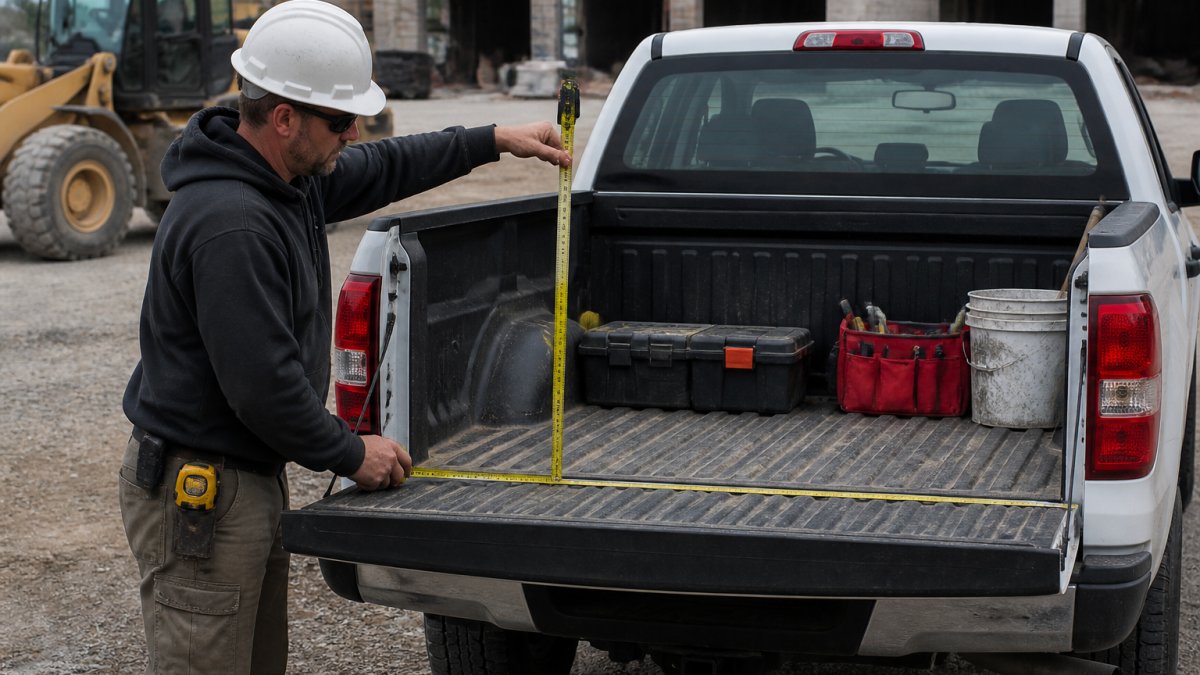
Next, measure height. Check the distance from the truck bed floor to the top of the bed rails. This determines whether a folded ladder will fit without protruding above the sides.
Width matters too. Measure the interior bed width between the side rails. Most trucks are 60 inches wide, but bed liners, storage boxes, or tool organizers reduce usable space. A ladder rack or mounting system needs at least 6 inches of clearance on each side to avoid interference.
Document these measurements before shopping. Write them down and bring them when you visit a supplier or order online. Knowing your exact dimensions prevents the frustration of receiving equipment that doesn't fit your specific truck.
Compact Truck Ladders: Folding vs. Telescoping vs. Retractable
Three main designs dominate the space-saving ladder market, and each has distinct advantages depending on your work patterns.
Folding ladders collapse like an accordion or hinge at the center. When closed, they're compact and lightweight. A two-step or three-step folding ladder easily slides under a truck bed or into a tool box.
Telescoping ladders extend and retract like a telescope. You pull or crank the sections outward to reach your desired height, then lock them in place. They offer excellent space efficiency, a fully collapsed telescoping ladder can fit in tight compartments. The advantage is adjustable height: one ladder serves multiple purposes. However, telescoping mechanisms require regular maintenance to prevent rust and ensure smooth operation.
Retractable ladders use spring mechanisms or motorized systems to extend and collapse automatically. These are the premium option for space-saving design. A retractable ladder might be completely hidden under a truck bed or mounted vertically on the side, then deployed with a simple pull or button press. The trade-off is cost and complexity.
For most construction crews, a folding or telescoping design strikes the right balance between cost, durability, and space efficiency. Little Giant Ladders offer multi-functional designs that combine stability with compact storage, making them a reliable choice for contractors who need equipment that performs under demanding job-site conditions.
Pull-Out Trailer Step Ladder Installation and Use
A pull-out trailer step ladder mounts directly to your truck bed or trailer, providing safe ground-level access without removing a separate ladder. This design is particularly valuable for electricians, utility workers, and maintenance crews who need frequent access to roofing or elevated equipment.
Installation begins with selecting your mounting location. Most contractors mount pull-out ladders on the driver's side or passenger's side of the truck bed, near the cab. This position provides stable use and doesn't interfere with cargo space. You'll need a drill, bolts, and a wrench. The ladder typically attaches to the bed frame using 3-4 mounting points.
Once mounted, test the pull-out mechanism by hand before using it under load. The ladder should slide smoothly without binding or catching. If it sticks, check for dirt or debris in the slide channels and clean thoroughly. A light coat of silicone lubricant keeps the mechanism operating smoothly through multiple seasons.
When deploying the ladder, pull it straight out and lock it fully before climbing. Most pull-out designs have a locking pin or detent that holds the ladder in the extended position. Never climb a partially extended ladder, the unstable angle increases fall risk. Once you've finished work, retract the ladder slowly and ensure it seats fully in the stowed position. A fully retracted ladder is less likely to catch wind or create drag while driving.
Truck Ladder Rack Solutions for Safe Storage
A truck ladder rack keeps your equipment organized and accessible while protecting both the ladder and your truck bed. The Little Giant® Ladder Rack™ is specifically designed to prevent damage from improper storage and reduce the risk of accidents caused by unsecured equipment.

A quality ladder rack mounts securely to your truck bed or roof. Wall-mounted racks work well if you have dedicated storage space at your job site or home base. For on-vehicle storage, bed-mounted racks keep the ladder within arm's reach and protect it from weather and theft. The rack should support your ladder's weight without sagging or shifting. A 34-kilogram load capacity is typical for standard residential and light commercial ladders.
The key advantage of a dedicated rack is organization. Instead of laying a ladder loosely in the truck bed, where it can slide, tip, or damage other equipment, a rack holds it securely in a fixed position. This also frees up bed space for tools, materials, and cargo.
When selecting a rack, verify that it matches your truck's bed style. Some racks fit standard beds; others work with spray-in liners or custom storage systems. Installation typically takes 30 minutes to an hour with basic tools. Once installed, a rack requires minimal maintenance beyond occasional tightening of bolts to ensure everything stays secure.
Understanding Ladder Load Capacity for Job-Site Demands
Load capacity determines whether a ladder is safe for your specific work. This is not a suggestion, it's a safety requirement. A ladder rated for 250-pound capacity should never be used to support a 300-pound load, regardless of how stable it feels.
Load capacity includes the weight of the person using the ladder plus any tools, equipment, or materials they're carrying. A 200-pound electrician carrying a 50-pound tool bag is operating at 250 pounds of load. If the ladder is rated for 250 pounds, they're at the maximum safe limit. Any additional weight, a second person on the ladder, heavier tools, or unexpected load, exceeds safe operating limits and increases injury risk.
Most space-saving ladders for construction trucks fall into these capacity ranges:
- Two-step and three-step folding ladders: 250-300 pounds
- Telescoping ladders: 250-350 pounds
- Heavy-duty retractable systems: 300-450 pounds
Choose a ladder with capacity that exceeds your typical load by at least 50 pounds. This safety margin accounts for variations in weight and unexpected situations. If your crew includes people weighing over 200 pounds, prioritize ladders rated for 350 pounds or higher.
The Velocity® 2.0 series from Little Giant Ladders supports up to 150 kilograms, making it suitable for most construction applications. The reinforced frame ensures the ladder maintains stability even when operating near its maximum capacity.

Installation, Safety Standards, and Maintenance
Proper installation and ongoing maintenance extend ladder life and prevent accidents. Most space-saving ladders for construction trucks require secure mounting to prevent movement while driving or during use.
Start with your truck's surface. A clean, dry mounting surface ensures bolts grip properly. Remove any dirt, rust, or old adhesive before installation.
Tighten all fasteners firmly but don't over-tighten, which can strip threads or crack mounting points. Use a torque wrench if you have one, most manufacturers specify the correct tightness in their installation guides. Check bolts monthly during the first few months of use, then quarterly afterward.
Safety standards vary by region, but EN131 certification is widely recognized in Europe and indicates that a ladder meets rigorous testing for stability, durability, and load capacity.
Maintenance is straightforward. After each use, wipe down the ladder with a dry cloth to remove dirt and moisture. Once monthly, inspect the entire ladder for cracks, bent sections, or loose rivets. Folding mechanisms should move smoothly without grinding sounds.
Store your ladder in a dry location when not in use. Extended exposure to moisture accelerates rust and corrosion, especially on aluminum components. If you use your ladder year-round, consider applying a light coat of rust-preventative oil to metal parts before winter storage.
Conclusion: Choosing the Right Space-Saving Ladder for Your Team
Selecting the right space-saving ladder for construction trucks requires balancing three factors: available truck bed space, your typical job-site tasks, and the weight capacity you actually need. Measure your truck bed carefully, assess whether a folding, telescoping, or retractable design fits your workflow, and prioritize ladders with load capacity that exceeds your crew's typical requirements by at least 50 pounds.
At Distributor of Little Giant LTD, we understand that construction crews need equipment that works reliably under demanding conditions. The Velocity® 2.0 and Velocity® 2.0 PRO models provide multi-functional designs with 150-kilogram load capacity, reinforced frames, and the stability that professionals depend on. The Little Giant® Ladder Rack™ keeps your equipment organized and protected while freeing up truck bed space for tools and materials.

Get started with Little Giant Ladders and transform how your team manages equipment on the job site.
| Design Type | Load Capacity | Space When Folded | Best For |
|---|---|---|---|
| Folding Ladder | 250-300 lbs | Compact, fits under bed | General maintenance, light work |
| Telescoping Ladder | 250-350 lbs | Adjustable height, moderate footprint | Varied job-site heights |
| Retractable System | 300-450 lbs | Minimal space, hidden storage | Heavy-duty work, frequent use |
| Pull-Out Trailer Step | 250-350 lbs | Integrated with truck bed | Roofing, electrical, utility work |
Construction crews that prioritize space efficiency without sacrificing safety see measurable improvements in job-site productivity and equipment organization. The right ladder system keeps your team safe, your truck organized, and your equipment ready for the next job. According to OSHA guidelines on ladder safety, proper selection and maintenance of fall protection equipment directly reduces workplace injuries. Invest in equipment certified to EN131 safety standards, which ensures your ladders have been tested for stability and durability.
Frequently Asked Questions
What makes space-saving ladders better than standard ladders for construction trucks?
Space-saving ladders fold, telescope, or retract to compact sizes, freeing truck bed space for tools and materials. Standard ladders waste 8-12 feet of bed length when stowed. On active job sites with limited storage, this difference directly increases your cargo capacity and reduces clutter. Models like the Velocity® 2.0 transform into multiple configurations, eliminating the need for several single-purpose ladders.
How much weight can a compact truck ladder safely support?
Most professional-grade compact truck ladders carry 150 kg (330 lbs) load capacity, meeting EN131 safety standards. The Velocity® 2.0 and Velocity® 2.0 PRO both support this rating with reinforced feet and locking mechanisms. Always verify the load capacity matches your body weight plus tools. Exceeding rated capacity voids warranties and creates serious fall risks on job sites.
Can I use a pull-out trailer step ladder on a truck bed?
Yes, pull-out trailer step ladders mount under truck beds or on side frames, providing quick access without occupying bed space. They're ideal for electricians and maintenance crews who need frequent access to the truck's top for equipment or inspections. Installation requires under-vehicle or side-mount clearance, so measure your ground clearance before purchasing to ensure no interference with curbs or debris.
What's the difference between a truck ladder rack and storing a ladder loose in the bed?
A truck ladder rack like the Little Giant® Ladder Rack™ mounts to your vehicle's wall or frame, holding ladders securely while freeing bed space for cargo and reducing damage risk. Loose ladders shift during transport, creating safety hazards and wear. Racks prevent tipping, sliding, and weather damage while keeping your ladder accessible. Wall-mounted racks typically hold up to 34 kg.