

Table of Contents
- Why Buy Heavy Duty Fiberglass Extension Ladders for Job Site Safety
- Duty Ratings and Load Capacities: Type I, IA, and IAA Explained
- Type 1A Fiberglass Extension Ladder: The 300-Pound Workhorse
- Type 1AA Fiberglass Extension Ladder: Maximum Capacity for Heavy Trades
- Fiberglass Extension Ladder Length: How to Match Reach Height to the Job
- Fiberglass Extension Ladder Weight: Balancing Portability and Strength
- Rung Styles, Locking Mechanisms, and Non-Conductive Safety Features
- Conclusion
- Frequently Asked Questions
Last Updated: October 18, 2026
Why Buy Heavy Duty Fiberglass Extension Ladders for Job Site Safety
Buy heavy duty fiberglass extension ladders when the work involves live circuits, heavy tools, or repeated daily setups on uneven ground. At Distributor of Little Giant LTD, we supply multi-functional ladders to contractors, electricians, and maintenance teams who need that margin.
Most crews under-specify the one piece of equipment they stand on all day. A light-duty household ladder flexes under a tool belt and a bag of fittings, and flex becomes sway, then a fall.
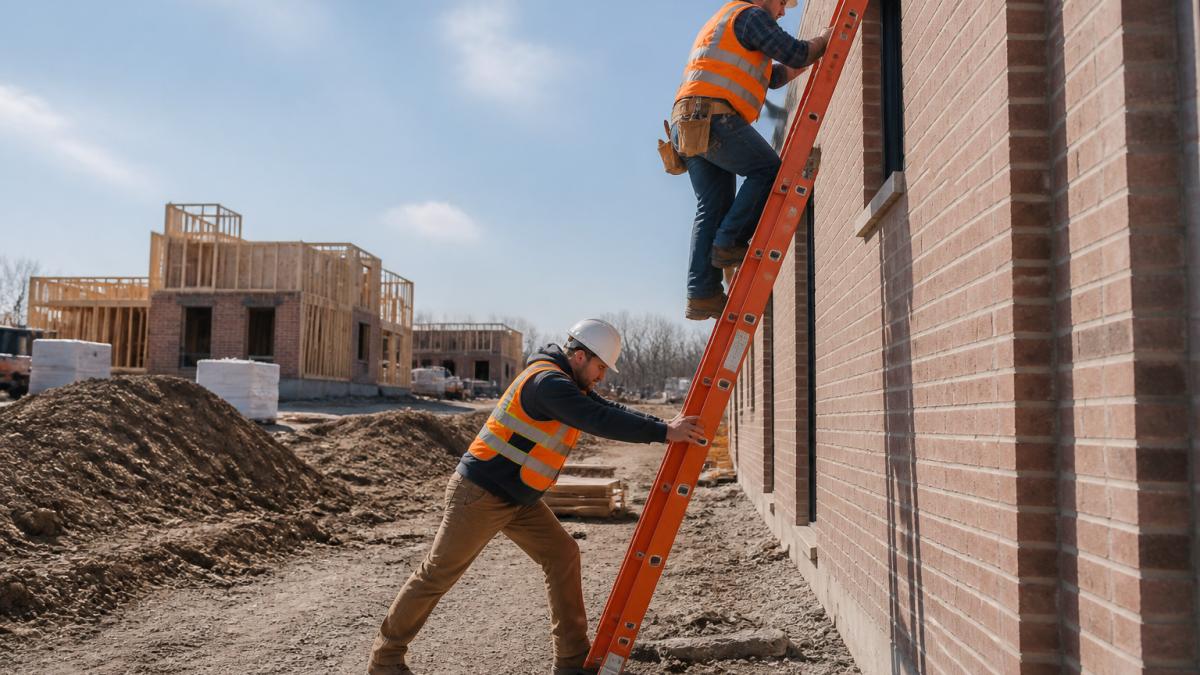
Three practical reasons drive the switch:
- Non-conductive rails. Fiberglass does not carry current, which matters for anyone working near panels, conduit, or overhead lines.
- Higher load ratings. Heavy-duty and extra-heavy-duty classes carry the worker plus tools plus materials.
- Stability on bad ground. Extension ladders with proper rung locks and a wide base handle slopes and gravel better than fixed-length steps.
A common mistake is buying on price alone and discovering the ladder walks or bows on the first job. The Health and Safety Executive guidance on working at height is blunt about it: falls from ladders remain one of the most common causes of serious injury on site, and choosing the right class of equipment is part of the legal duty to manage that risk.
Duty Ratings and Load Capacities: Type I, IA, and IAA Explained
A duty rating is the maximum total load a ladder is designed to support, covering the user, tools, and materials combined. Fiberglass extension ladders are sold in three main classes: Type I at 250 lb, Type IA at 300 lb, and Type IAA at 375 lb.
| Duty Rating | Load Capacity | Typical Use | Rail Material |
|---|---|---|---|
| Type I | 250 lb | Light trade, occasional maintenance | Fiberglass |
| Type IA | 300 lb | General contracting, electrical work | Fiberglass |
| Type IAA | 375 lb | Heavy trades, industrial plants | Fiberglass |
The number is not a safety factor to spend down to zero: a 300-pound ladder carrying a 240-pound electrician with a 50-pound tool bag is at the limit before the cable reel goes up.
Capacity and stiffness travel together. A Type IA flexes less under the same load than a Type I, which is why crews climbing daily prefer the heavier class even when the weight math allows the lighter one. Fewer flex cycles means less fatigue at the top, and fatigue is where mistakes happen.
Type 1A Fiberglass Extension Ladder: The 300-Pound Workhorse
The Type 1A fiberglass extension ladder is the default choice for most professional work. At 300 pounds of capacity, it covers a single tradesperson plus a realistic tool load, and the fiberglass rails keep it safe near electrical work.
This is where we would spend most buyers' money. Type IA hits the balance point: enough capacity for general construction, roofing, and maintenance, without the extra heft of the top class.
Where it falls short: if your team routinely carries heavy materials up, or if two people need to work from the same ladder, 300 pounds runs out fast.
For buyers stepping up from a domestic aluminium step ladder, expect the fiberglass extension to feel heavier and stiffer at the same time. The stiffness is the point.
Type 1AA Fiberglass Extension Ladder: Maximum Capacity for Heavy Trades
A Type 1AA fiberglass extension ladder carries 375 pounds and is built for industrial maintenance, heavy construction, and any task where the load at the top is unpredictable.
Picture a plant fitter climbing with a full tool bag, a replacement motor, and a colleague passing parts up. That is not a 250-pound scenario, nor really a 300-pound one once you add margin, Type IAA exists for that.
The trade-off is honest: extra capacity means extra weight in the rails, so a 375-pound-rated fiberglass extension ladder is heavier to carry and slower to set up than a Type IA of the same length. Fixed-position work absorbs that cost; six locations before lunch does not.
Matching class to workflow beats buying everything at the top spec and watching crews avoid the heavy ladder.
Fiberglass Extension Ladder Length: How to Match Reach Height to the Job
Fiberglass extension ladder length is the retracted length, not the height you can safely work from. A ladder labelled 24 feet does not give 24 feet of working height, buying on that assumption is the most common sizing error we see.
The working rule: the base of the ladder sits one unit out for every four units up. At a 75-degree setup angle, a 24-foot extension ladder reaches roughly 21 feet to the top of the rails, and your safe working height, measured to your feet, sits lower again.
A practical selection checklist:
- Measure the actual height of the work surface, not the height of the building
- Add 3 feet of ladder above the landing point for safe handhold when stepping off
- Account for the 4:1 base setback when calculating reach
- Check the maximum extension length, not just the retracted length
- Confirm the ladder fits your vehicle and storage space when retracted
For a two-storey facade, a 28-foot extension ladder is a common starting point. For single-storey roof work, a 24-foot ladder usually covers it. Measure before you buy; guessing costs more than a tape measure.
Fiberglass Extension Ladder Weight: Balancing Portability and Strength
Fiberglass extension ladder weight rises with length and duty rating, and that trade-off decides whether a crew actually uses the ladder or leaves it on the van.
Two people should always carry and raise an extension ladder, regardless of weight. That is a control issue, not a weight limit: a ladder that swings while being raised is dangerous at any mass.
Weight really bites in transport and setup frequency: a ladder that takes two people and four minutes to position gets skipped in favour of a stepladder and a bad reach.
Balance the decision like this:
- Fixed site, long duration: accept the heavier Type IAA and longer length.
- Service work, multiple stops: favour Type IA at the shortest length that reaches.
- Mixed fleet: keep one long heavy-duty ladder per site and lighter units per van.
A normalized comparison helps procurement teams see the trade-offs side by side. Use a simple table like this when evaluating options, filling in the exact figures from each product's label:
| Length | Duty Rating | Approx. Weight Range | Typical Reach (at 75°) | Best For |
|---|---|---|---|---|
| 24 ft | Type IA | 30-40 lb | ~21 ft to top of rails | Single-storey roof work, service vans |
| 24 ft | Type IAA | 35-45 lb | ~21 ft to top of rails | Industrial maintenance, heavy tool loads |
| 28 ft | Type IA | 35-45 lb | ~25 ft to top of rails | Two-storey facade, general contracting |
| 28 ft | Type IAA | 40-50 lb | ~25 ft to top of rails | Plant work, unpredictable loads |
| 32 ft | Type IAA | 45-55 lb | ~28 ft to top of rails | Tall facades, fixed-site industrial |
Fiberglass needs care aluminium does not: store it flat or on proper hooks, keep it out of prolonged direct sun, and inspect rails for cracks, chips, and white stress marks before every use.
Rung Styles, Locking Mechanisms, and Non-Conductive Safety Features
Rung design and rung locks decide how a fiberglass extension ladder feels in use. D-rung ladders give a flat standing surface and reduce foot fatigue over a long day; round rungs are lighter and cheaper but harder on the feet during repeated climbs. For crews climbing a dozen times a day, D-rungs are usually worth the extra weight.
The locking mechanism fails silently. Rung locks should engage fully with an audible click on both fly and base sections, and the rope and pulley should run clean without fraying.
Non-conductive construction is why electricians pay more for fiberglass: the rails do not carry current, which is why fiberglass extension ladders are standard for electrical work and anything near overhead lines.
A concise pre-use checklist that covers the points competitors' product pages typically leave out:
- Inspect rails for cracks, delamination, or stress whitening, retire the ladder if any are found.
- Test both rung locks engage and release cleanly with an audible click.
- Check the rope and pulley for fraying, stiffness, or missing parts.
- Inspect feet for wear; replace if the tread is gone or the pad is loose.
- Confirm firm footing, set the base on solid ground, not gravel or mud, and use a board or mat if needed.
- Set the correct angle, the 4:1 rule (one unit out for every four units up) gives roughly 75 degrees.
- Secure the top against the wall or use a standoff, and tie off the ladder if the site requires it.
- Check for overhead hazards, keep fiberglass ladders away from live lines even though the rails are non-conductive; the protection is not a substitute for clearance.
At Distributor of Little Giant LTD, we stock ladders certified to EN131, so class and construction are documented rather than assumed. Our multi-functional designs are built for stability on uneven terrain, and every unit carries a lifetime warranty.
EN 131 ladder standard overview from the European Committee for Standardization
Conclusion
The hardest part of buying a heavy-duty fiberglass extension ladder is resisting the urge to buy one ladder for every job and ending up with the wrong class everywhere. Match the duty rating to the load, the length to the measured reach, and the weight to how often your crew moves it.
Distributor of Little Giant LTD supplies ladders built for exactly that decision: EN131-certified construction, multi-functional designs that hold stable on uneven ground, and a lifetime warranty behind every unit. More than 50 years of ladder engineering sits behind the range.
Get started with Distributor of Little Giant LTD and put the right ladder class under your crew.
Frequently Asked Questions
What are the downsides of fiberglass extension ladders?
Fiberglass extension ladders weigh more than aluminum equivalents, which can make them tiring to carry over long distances. They also cost more upfront and can degrade if the gel coat is damaged and moisture reaches the fibers. However, for electricians and anyone working near power lines, the non-conductive properties outweigh these drawbacks. Inspect regularly for cracks or exposed fibers, and store the ladder indoors to maximize service life.
How heavy is a 20-foot fiberglass extension ladder?
A 20-foot fiberglass extension ladder typically weighs between 30 and 45 pounds, depending on duty rating and rail thickness. Type 1A models tend to sit at the lower end, while Type 1AA models are heavier due to thicker rails. Check the product specifications for exact weight before buying, and consider a lighter model if you frequently carry the ladder alone. Two-person carry is recommended for longer ladders.
What do Type 1A and Type 1AA ladder ratings mean?
Type 1A ladders are rated for a 300-pound maximum load, while Type 1AA ladders handle 375 pounds. These ratings include the worker plus tools and materials, so choose a rating that covers your total weight with a safety margin. For heavy-duty construction or industrial maintenance, Type 1AA is the safer choice. Both ratings are clearly marked on the ladder's duty label.
How do I choose the right extension ladder length for my work?
Match the ladder's maximum reach height to your working height, not the other way around. As a rule, a 20-foot extension ladder reaches about 19 feet when fully extended at the correct 75-degree angle. Measure the height you need to access, add two feet for safe handhold above the landing, and select the next standard length up. Never stand on the top three rungs.